Why Your Neighbor's Solar Savings Tell You Almost Nothing About What Your Home Could Save
Two houses on the same street, built by the same developer, can produce completely different results. Here is exactly where the divergence comes from.
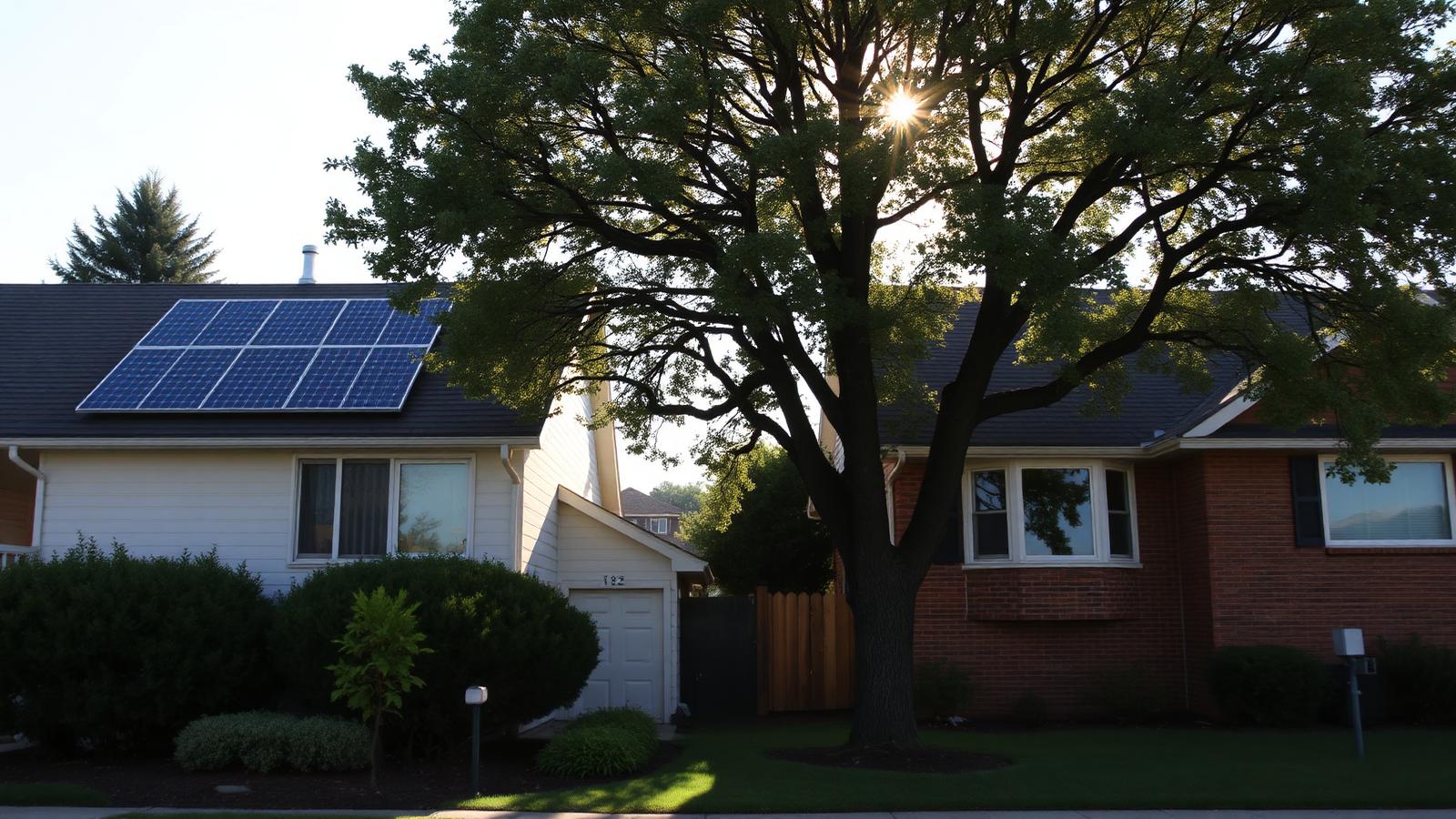
"My neighbor put panels up last year and says their bill is basically gone." It is the most common piece of evidence homeowners bring to this decision, and it is almost worthless as a predictor.
Not because your neighbor is wrong about their own experience. Because the number of variables separating their house from yours is larger than most people realize.
Seven things that differ between neighbors
Electricity consumption
Occupancy, work schedules, thermostat habits, water heating fuel, pool equipment, EV charging. Two identical floor plans routinely differ by a factor of two or more in annual kilowatt-hours.
Roof orientation
A house rotated ninety degrees on its lot has entirely different roof planes facing the sun. Developers rotate plans constantly to fit lots.
Shading
One mature oak in the wrong place can remove a substantial share of a roof's annual production. Your neighbor's tree situation is not your tree situation.
Utility rates and rate structure
Most neighbors share a utility, but not necessarily a supplier or a rate plan. A household on a third-party supply contract or a time-varying rate values displaced electricity differently.
System size and equipment
Systems are sized to usage and available roof area. Different panel models, inverter configurations and array layouts produce different output from the same roof.
Financing structure
Cash, loan, lease and PPA produce different monthly obligations and different long-term totals for the same equipment. Two neighbors with identical arrays can have very different net outcomes.
Incentives claimed
Which incentives applied, who was eligible to claim them, and what the rules were at the time of installation all vary. A project completed two years ago may have operated under different program terms than one quoted today.
Two hypothetical neighbors
Consider the Aldens and the Barretts — invented households, constructed to illustrate divergence, not based on any real customers.
| The Aldens | The Barretts | |
|---|---|---|
| Annual usage | 16,400 kWh | 8,900 kWh |
| Main roof plane | South, unshaded | East and west; large oak on the south side |
| Roof age at install | 4 years | 16 years |
| Water heating | Electric heat pump water heater | Natural gas |
| Vehicles | One EV charged at home | Two gasoline vehicles |
| Structure | Owned via loan | Lease with annual escalator |
| Likely outcome | Large share of usage offset; strong candidate | Smaller offset, roof work needed first, different economics entirely |
Both households could be perfectly satisfied with their decisions. Neither one's numbers tell the other anything actionable.
The better starting point
The best starting point is not your neighbor's solar system. It is your own electric bill.
Twelve months of your kilowatt-hours, your effective rate, your roof's geometry and your shading are the four inputs that determine what is possible at your address. Everything else is anecdote.
What This Means for NJ Homeowners
- Treat neighbor outcomes as evidence that a process exists, not as a forecast.
- Ask neighbors about contractor experience, not about savings figures.
- Insist that any estimate for your home be built from your own usage history.
- Be equally skeptical of a neighbor's disappointing result — their variables are not yours either.
Personalized analysis is not an upsell. It is the only thing that produces a number that means anything for your house.
- Solar
- Save Money
- Home Energy