Why Cutting Your Electricity Usage May Not Be Enough to Stop Rising Energy Bills
Households that do everything right on efficiency sometimes still watch the bill climb. The explanation is in the formula behind every utility statement.
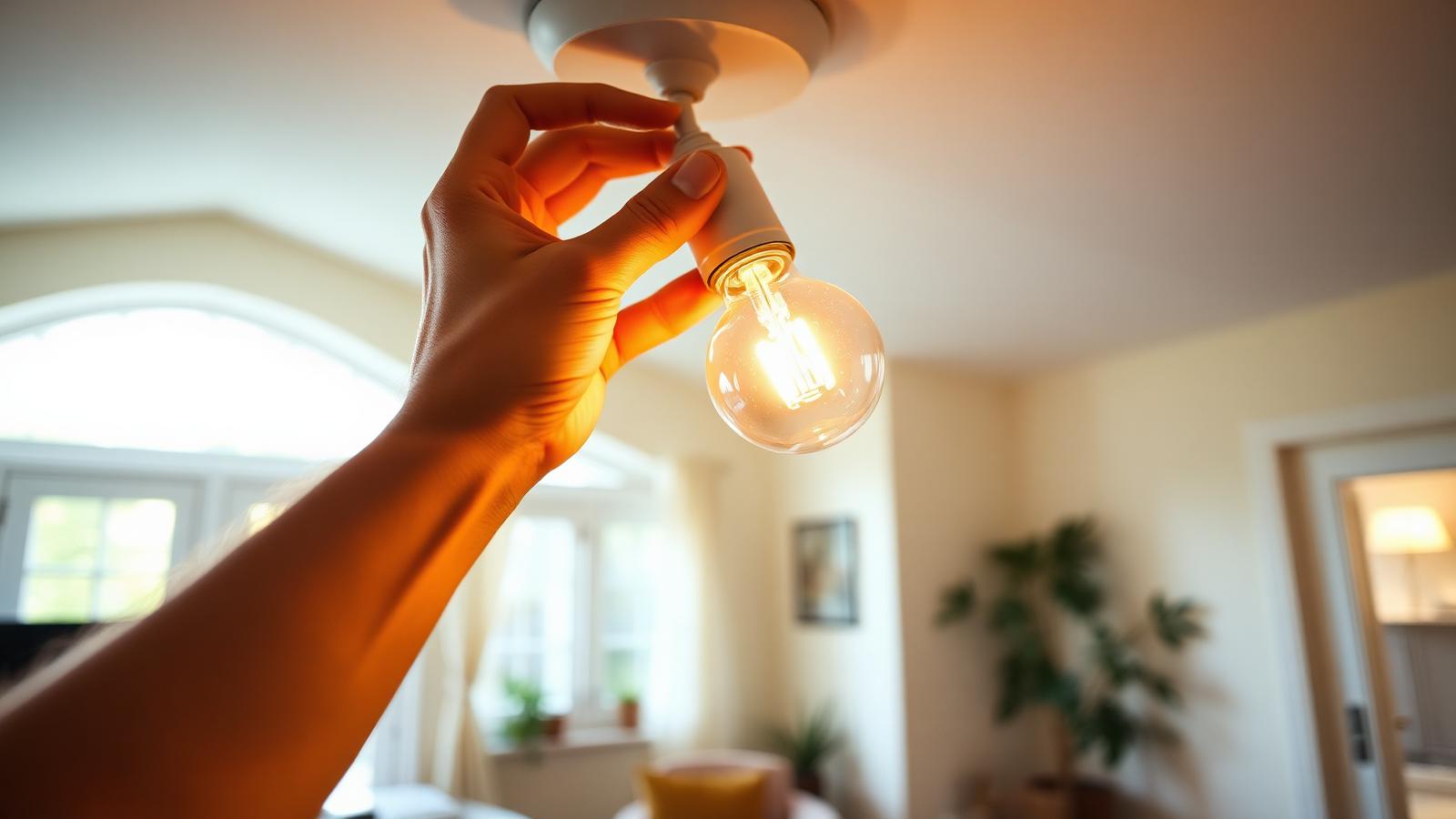
There is a particular kind of frustration that shows up in reader emails every summer. A household replaces the bulbs, installs a smart thermostat, insulates the attic, stops leaving the basement lights on — and the bill goes up anyway.
Nothing went wrong. The efficiency work almost certainly did what it was supposed to do. The problem is that it addressed one half of a two-part equation.
The formula behind every utility bill
Strip away the line items and a residential electric bill reduces to this:
Consider a straightforward illustration. Assume a household uses 1,100 kWh in a month at an effective cost of 22 cents per kWh. That is $242. Now assume the household completes efficiency work that cuts consumption by 12 percent, to 968 kWh — a genuinely good result. If the effective cost has meanwhile moved to 25 cents, the bill is $242 again.
| Scenario | Monthly kWh | Assumed effective rate | Monthly bill |
|---|---|---|---|
| Before upgrades | 1,100 | $0.22 | $242 |
| After 12% usage reduction, same rate | 968 | $0.22 | $213 |
| After 12% usage reduction, higher rate | 968 | $0.25 | $242 |
The household in row three did not fail. It absorbed a cost increase without paying more — which is a real benefit that is completely invisible on the statement.
What efficiency does well
None of this is an argument against efficiency. It is the highest-value first step in almost every home, and the improvements below are durable, low-risk and frequently supported by utility or state programs.
Lighting
LED conversion is largely complete in most homes, but exterior fixtures, basements, garages and closets are often overlooked. The savings per fixture are small; the cost is small too, and the payback is fast.
Thermostats and controls
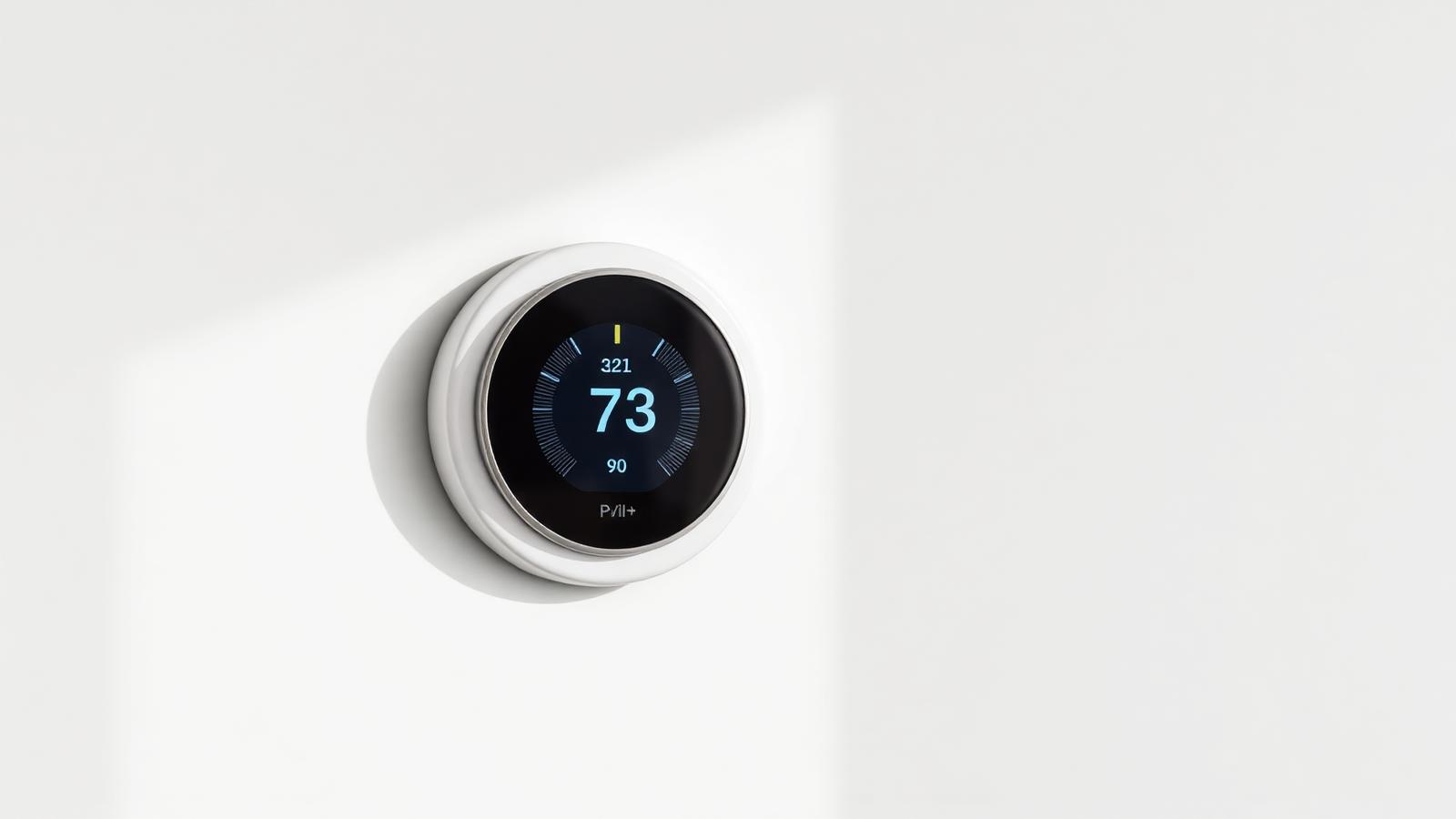
A programmable or smart thermostat pays off primarily by preventing conditioning of an empty house. The savings depend heavily on whether the schedule is actually used rather than overridden every evening.
Insulation and air sealing
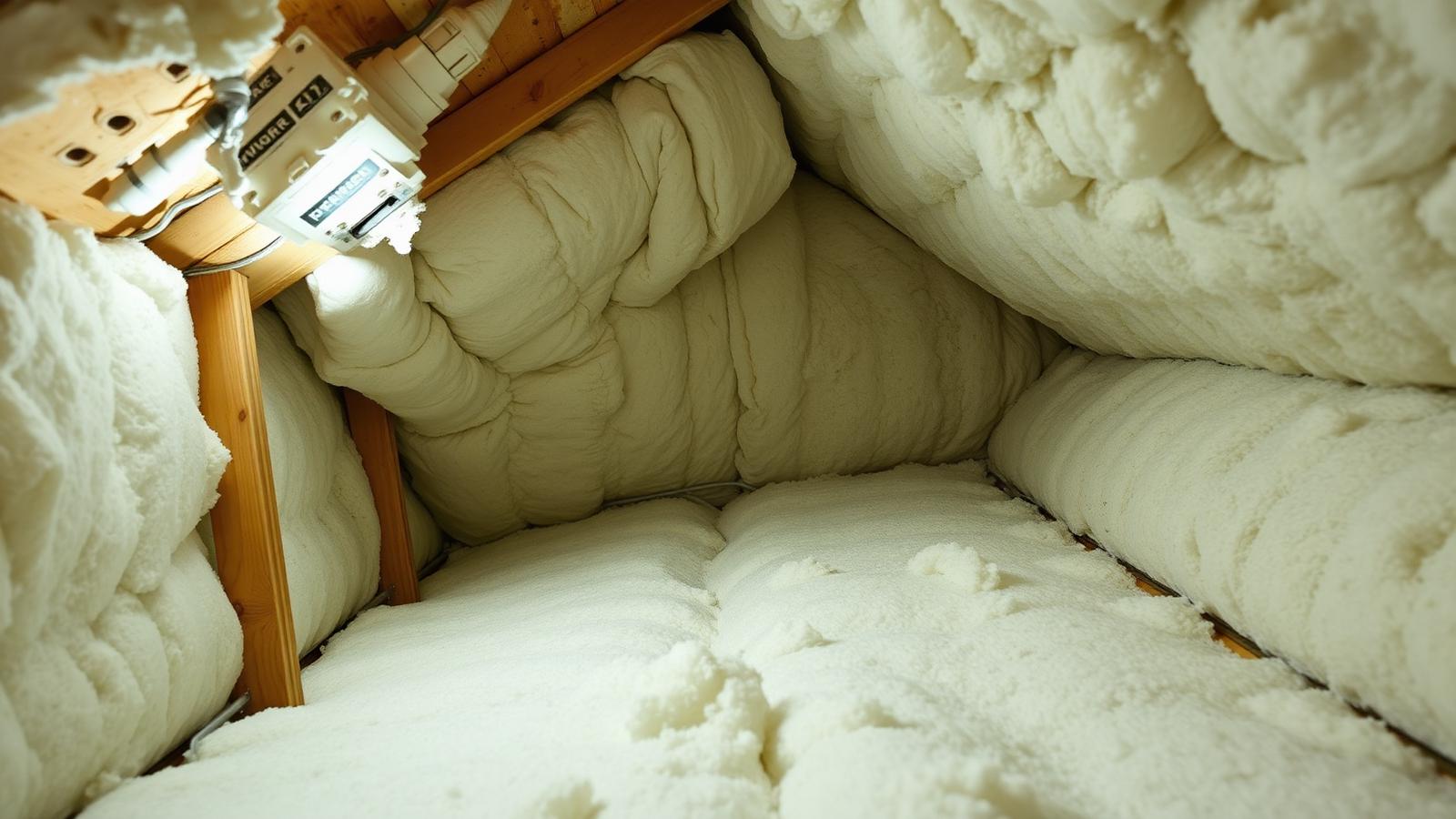
This is where the largest and most reliable reductions usually live in New Jersey's older housing stock. Air sealing the attic plane and bringing insulation up to current recommendations reduces both heating and cooling load, and the improvement never degrades or needs to be remembered.
HVAC equipment
Replacing an aging air conditioner or furnace with a properly sized high-efficiency unit is the single largest equipment-level lever in most homes. Sizing matters more than the efficiency rating on the label — an oversized system short-cycles and underperforms its ratings.
Phantom loads and behavior
Always-on electronics, secondary refrigerators in the garage, and older pool pumps quietly consume around the clock. An energy monitor or a plug-in meter will find them faster than guesswork.
- A second refrigerator running in an unconditioned garage is one of the most common findings in a home energy audit.
- Pool pumps left on legacy single-speed schedules are another.
- Dehumidifiers in damp basements run far more hours than owners estimate.
Where the ceiling is
Every home has a floor below which consumption will not go without changing how the household lives. Refrigeration, hot water, laundry, cooking, climate control and the growing set of devices that are simply always plugged in add up to a substantial irreducible base.
Once a household approaches that floor, additional efficiency spending delivers diminishing returns, and the remaining bill is essentially the base load multiplied by whatever the utility charges. At that point the only remaining levers act on the second half of the equation.
The distinction that matters
This is the sentence worth keeping:
Solar does not lower the utility's rate, and it does not eliminate every charge on the statement — fixed customer charges and any imported electricity remain. What it can do, for a suitable property, is reduce the number of kilowatt-hours purchased at retail. Whether that produces meaningful savings depends entirely on the home's usage, roof and the project structure available to it.
The right order of operations
Homeowners who work through this in sequence consistently end up with better outcomes than those who start with the biggest project.
- Measure first: pull twelve months of kilowatt-hours and calculate your effective rate.
- Fix the envelope: air sealing and insulation before equipment.
- Right-size equipment for the improved home, not the old one.
- Eliminate the obvious always-on loads.
- Only then evaluate generation, sized to the reduced usage rather than the original.
Doing it in this order also means any solar evaluation is based on the home you will actually live in, rather than the leakier version you started with — which usually means a smaller, less expensive system.
What This Means for NJ Homeowners
If your bill has stayed flat or risen despite genuine efficiency work, your improvements are probably not the problem. You are seeing the second half of the equation move. Understanding that is the difference between assuming efficiency failed and recognizing that you have addressed everything on your side of the meter.
The next question — whether changing where some of your electricity comes from makes sense for your particular house — depends on numbers only your own bill and roof can supply.
- Energy Efficiency
- Utility Bills
- Home Upgrades